
5 Ways Anxiety Shows Up Unannounced
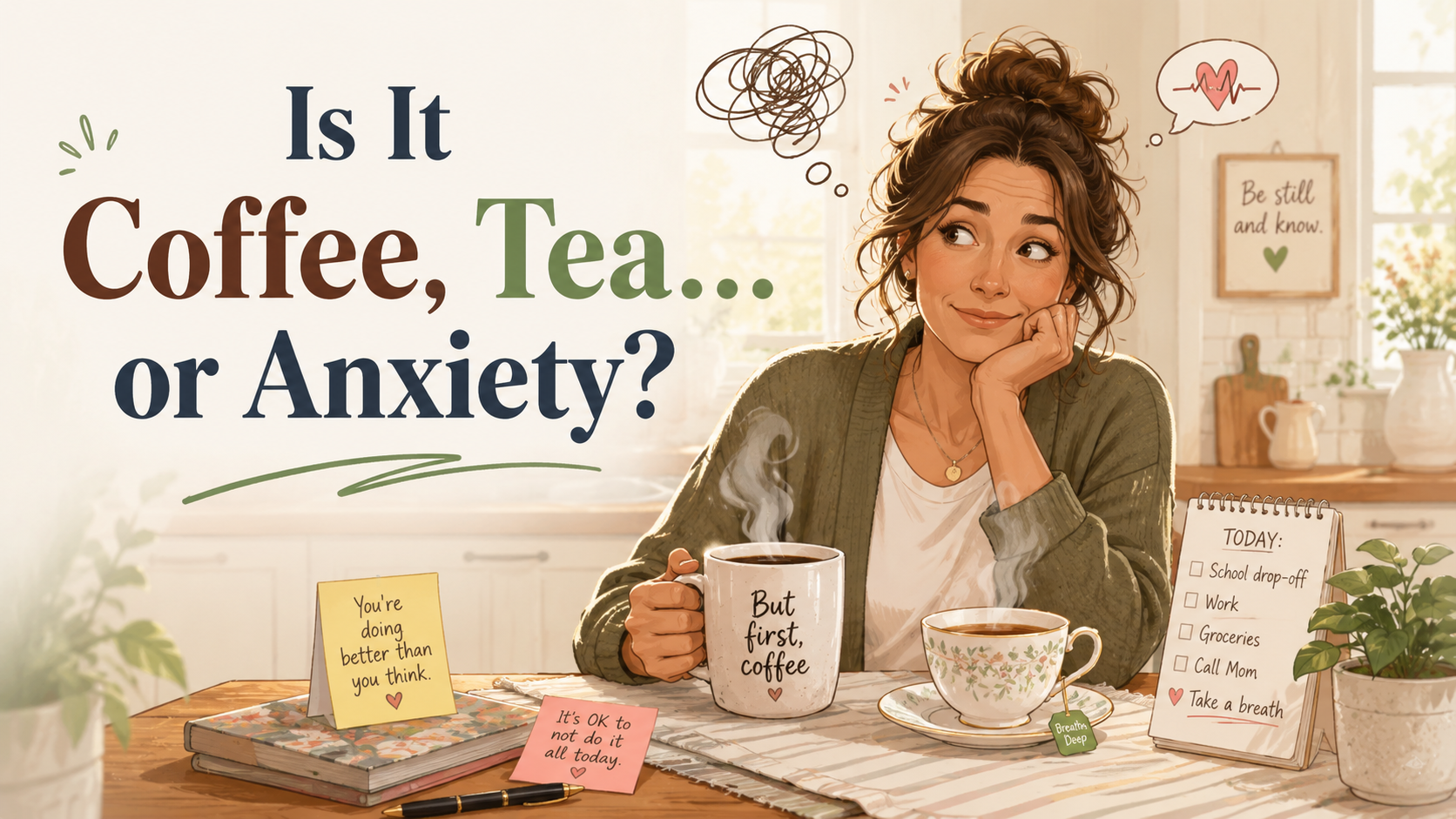
Is It Coffee, Tea… or Anxiety?
Most of us know what anxiety feels like in our thoughts.
The “what ifs” start circling. Your mind jumps ahead to everything that could go wrong. You replay conversations. You lie in bed tired, but your brain seems to believe it is the perfect time to review every concern you have had since 1997.
But anxiety does not always announce itself as worry.
Sometimes it shows up in the body first.
A patient may come in because of headaches, chest tightness, stomach problems, fatigue, trouble sleeping, or a racing heart. They are not trying to talk about anxiety. They may not even think of themselves as anxious. They just know something feels off.
And sometimes, after listening carefully and ruling out medical concerns, we begin to see that the body is carrying stress the patient has been trying to push through for a long time.
Anxiety is not weakness. It is not a character flaw. It is not a lack of faith. Anxiety is a real response in the nervous system. God created our bodies with the ability to react to danger. If you hear a loud crash behind you, your heart beats faster, your muscles tighten, and your body prepares you to respond. That is a good gift when there is real danger.
The problem is that anxiety can turn that alarm system on when there is no immediate threat.
Your body may act as though you are being chased, even when you are sitting at your desk, driving to work, waiting for test results, managing family stress, or trying to fall asleep.
Here are five ways anxiety can show up unannounced.
1. Your heart starts racing
One of the most unsettling ways anxiety shows up is through the heart.
Your heart may race, pound, skip, or feel like it is beating harder than usual. Sometimes this happens when you are already worried, but sometimes it seems to come out of nowhere.
That can feel frightening. It is also one reason people may wonder if something is wrong physically. And sometimes there may be, which is why chest pain, fainting, severe shortness of breath, or symptoms that are new or intense should always be taken seriously.
But anxiety can also make the body feel as though it is in danger, even when there is no immediate threat. The body releases stress hormones, the heart responds, and suddenly you are very aware of every beat.
It is not “all in your head.” It is happening in your body.
2. Your stomach gets involved
Anxiety can be very hard on the stomach.
Some people feel nauseated. Some lose their appetite. Some feel cramping, reflux, diarrhea, constipation, or a nervous feeling in the gut that is difficult to describe.
The brain and gut are closely connected. That is why stress can affect digestion so quickly. Your stomach may notice you are anxious before your thoughts have fully caught up.
This is also where coffee and tea can complicate things.
Caffeine can be a lovely morning ritual. It can also make an already sensitive stomach feel more unsettled. If you are drinking coffee or strong tea on an empty stomach and then wondering why your body feels jittery by 10 a.m., your body may be offering a gentle suggestion: perhaps breakfast should be invited to this relationship.
3. Your shoulders, jaw, or neck stay tight
Anxiety often settles into the muscles.
You may not realize how tense you are until your shoulders are near your ears, your jaw aches, or your neck feels stiff by the end of the day.
Some people clench their teeth. Some get tension headaches. Some feel like they can never quite get comfortable, even when they sit down to rest.
This is the body staying ready.
Ready for the next problem. Ready for the next phone call. Ready for the next bill, appointment, family issue, or hard conversation.
Over time, that constant readiness becomes exhausting.
A small check-in can help: Where are my shoulders right now? Is my jaw tight? Am I holding my breath? Sometimes the first step is simply noticing.
4. Sleep becomes harder
Anxiety loves bedtime.
All day long, there may be enough noise, work, responsibility, and activity to keep the mind occupied. Then the lights go off, the house gets quiet, and anxiety pulls up a chair.
This is when thoughts can become louder. Your body may feel tired, but your mind will not settle. You may fall asleep and wake up during the night. Or you may sleep for enough hours and still wake up feeling worn out.
Caffeine can add to this problem, especially later in the day. Some people can drink coffee after dinner and sleep like a peaceful house cat. Others have iced tea at 3 p.m. and find themselves at midnight mentally reorganizing the garage.
It helps to pay attention to patterns. What time do you usually have caffeine? How much are you having? Does your sleep change when you cut back or stop earlier in the day?
Your body may be giving you useful information.
5. You feel tired, even when you seem “fine”
Anxiety takes energy.
Even when no one else can see it, your body may be working hard. It may be scanning for danger, managing tension, replaying conversations, or preparing for problems that have not happened.
That kind of internal work can leave a person tired.
A patient may say, “I don’t know why I’m so exhausted.” They may be sleeping poorly. They may be carrying grief. They may be worried about family, finances, health, work, or loneliness. They may be doing everything they can to keep functioning, but inside, their body has been running too long without rest.
That does not mean the person is weak.
It means the body was not created to live in constant alarm.
So, is it coffee, tea… or anxiety?
Sometimes the honest answer is: yes.
Too much caffeine can mimic anxiety. Anxiety can make you more sensitive to caffeine. Poor sleep can make anxiety worse the next day, which makes you reach for more caffeine, which makes your body feel more anxious, and suddenly your nervous system is running a small espresso-powered marathon.
A few practical questions may help:
How much caffeine am I drinking in a day?
Am I drinking it on an empty stomach?
Do my symptoms get worse after coffee, tea, soda, energy drinks, or certain supplements?
Am I using caffeine to push through exhaustion instead of getting rest?
Am I drinking caffeine late enough in the day that it may be affecting my sleep?
For many adults, up to 400 mg of caffeine a day is often considered a general upper limit, but some people feel anxious with much less. A regular cup of brewed coffee may have around 95 mg, but coffee shop drinks, strong tea, energy drinks, and large servings can add up quickly.
If you suspect caffeine is contributing to anxiety, you do not have to break up with coffee dramatically. No one needs to stand in the kitchen, throw a mug into the sink, and declare, “It’s over.”
In fact, quitting suddenly can cause headaches, irritability, fatigue, and more misery than necessary.
Try cutting back gradually. Make one cup half-caf. Switch an afternoon coffee to herbal tea or water. Eat something before caffeine. Stop caffeine earlier in the day and see if your sleep improves.
Small changes can tell you a lot.
What can help when anxiety shows up in the body?
First, slow your breathing. When anxiety rises, breathing often becomes shallow and fast. Try breathing in through your nose for four counts, then exhaling slowly for six counts. A longer exhale can help tell the nervous system, “We are not in danger right now.”
Second, name what is happening. You might say, “This feels like anxiety. My body is sounding an alarm. I can respond slowly.” Naming it does not make everything disappear, but it can help you stop fearing the symptoms as much.
Third, move your body gently. A short walk, stretching, or simply unclenching your jaw and lowering your shoulders can help your body release some of the stress response.
Fourth, reduce the load where you can. Sometimes anxiety is not irrational. Sometimes life is genuinely heavy. If you are carrying too much, the next faithful step may be to ask for help, say no to one more thing, or let someone you trust know you are struggling.
Fifth, bring it to God honestly. You do not have to pray polished prayers when you are anxious. You can pray, “Lord, I am overwhelmed. Help me breathe. Help me take the next step. Remind me I am not alone.”
Scripture gives us this invitation: “Cast all your anxiety on him because he cares for you” (1 Peter 5:7). Sometimes anxiety is easy to miss because it does not always feel like worry. It may show up as a racing heart, an unsettled stomach, tight shoulders, poor sleep, or exhaustion. But once we begin to recognize the weight we are carrying, we can bring it to the Lord instead of carrying it alone.
Again and again, God meets people in fear, exhaustion, grief, and uncertainty. The Lord is close to the brokenhearted. He gives rest to the weary. He invites us to come to Him with what is heavy, not after we have cleaned ourselves up and figured everything out.
When should you ask for help?
Please do not ignore symptoms that feel urgent, severe, or unusual. Chest pain, fainting, severe shortness of breath, sudden weakness, or new symptoms should be evaluated right away.
It is also time to talk with a healthcare provider or counselor if anxiety is interfering with your sleep, relationships, work, health, concentration, or ability to do daily life. If you are having panic attacks, avoiding normal activities, using alcohol or substances to cope, or feeling hopeless, please reach out for help.
You do not have to carry it alone.
At the Neighborhood Christian Clinic, we are seeing more patients whose physical health and emotional health are connected. That is one reason Behavioral Health is such an important part of whole-person care. A patient may come in for a check-up, dental pain, high blood pressure, or fatigue, but as we listen, we may learn they are also carrying anxiety, loneliness, trauma, depression, or grief.
Caring for the whole person means we do not separate the body from the mind or the soul.
It means we listen.
It means we treat what hurts.
It means we pray when a patient welcomes prayer.
And it means we remind each person who walks through our doors that they are seen, valued, and loved by God.
Your body may not be betraying you.
It may be asking you to listen.