
Why Preventive Healthcare Matters, Even When You Feel Healthy
When you feel healthy, scheduling a medical appointment can be easy to put off. This is especially true when you do not have health insurance and every healthcare expense has to compete with groceries, rent, utilities, and other necessities.
But many health concerns do not begin with obvious symptoms.
Preventive healthcare can help identify potential problems earlier, sometimes before a person realizes anything is wrong. At The Neighborhood Christian Clinic (NCC), helping uninsured and underserved patients access preventive care is an important part of caring for the whole person.
What Is Preventive Healthcare?
Preventive healthcare focuses on maintaining health and identifying potential concerns before they become more serious.
Depending on a patient’s age, health history, and individual needs, preventive care may include routine medical visits, health screenings, women’s health services, and conversations with a healthcare provider about recommended follow-up care.
For someone without insurance, these routine appointments can be particularly easy to postpone. If nothing feels wrong, paying for a medical visit may not seem urgent.
Elena’s experience at NCC demonstrates why those visits can matter.
Elena Felt Healthy, but Her Screening Found Something Serious
At 33 years old, Elena was busy raising three young children.
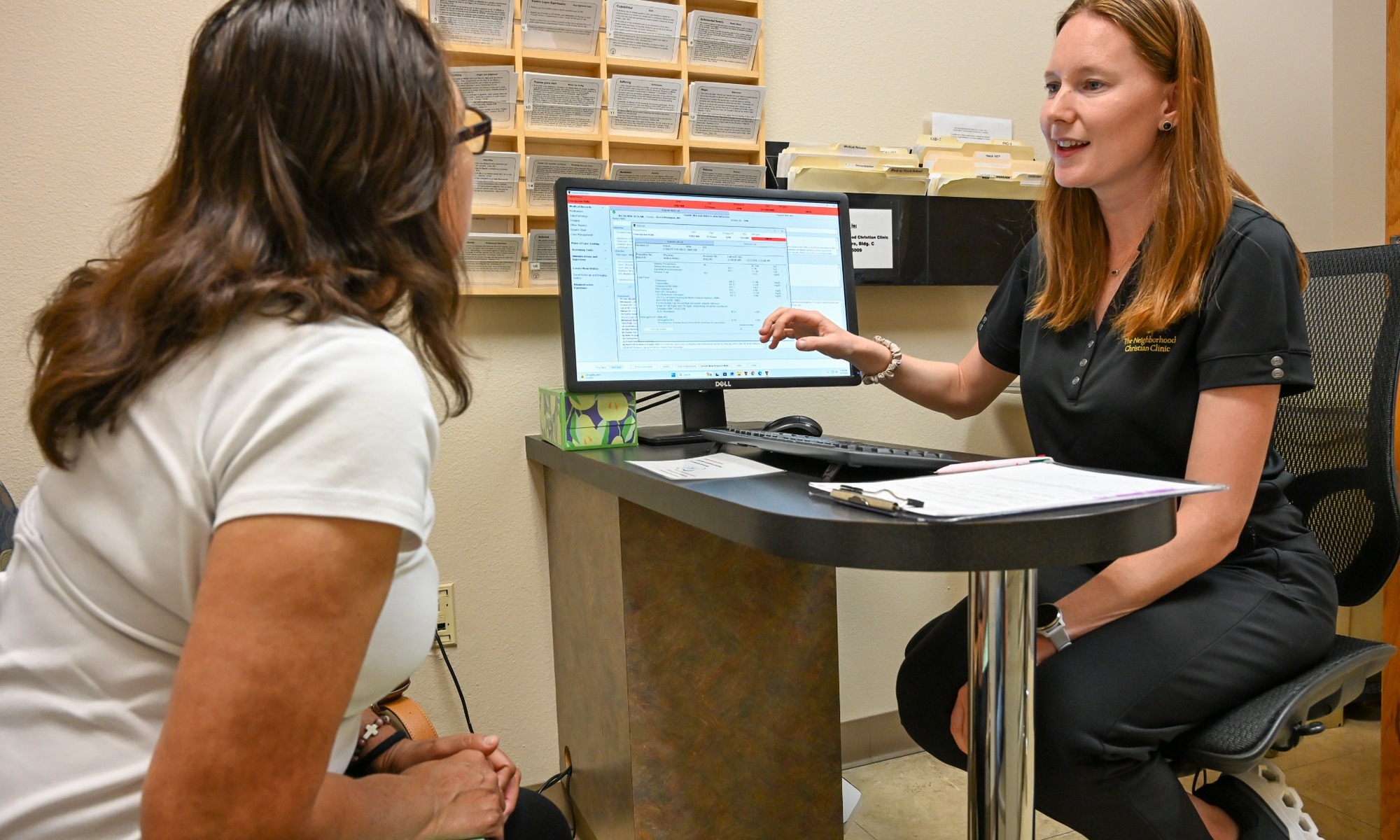
She came to NCC for a women’s health visit and Pap screening. The screening revealed severely abnormal cervical cells that could have progressed into cervical cancer if left untreated.
There had been no dramatic health crisis that brought Elena through the Clinic’s doors. It was a screening that uncovered the concern.
NCC’s team immediately began coordinating the follow-up care she needed.
In December, Elena returned to NCC and was seen by a volunteer gynecology team from Mayo Clinic. A colposcopy and additional cervical tissue samples confirmed that treatment was necessary.
NCC’s care coordination team then worked with a community surgical partner to arrange a LEEP procedure to remove the abnormal cells.
When the biopsy showed that additional tissue needed to be removed, Elena underwent a second procedure.
Today, Elena continues to receive close follow-up care, but her doctors believe the abnormal cells were caught before they became cancer.
Preventive Care Can Find Problems Before Symptoms Appear
Elena’s story illustrates one of the most important reasons preventive healthcare matters: feeling healthy does not necessarily mean there is nothing happening beneath the surface.
Some health concerns can develop without obvious early symptoms. Routine screenings give healthcare providers an opportunity to look for potential problems based on a patient’s age, medical history, and risk factors.
When something abnormal is identified, the next step may be additional testing, monitoring, treatment, or referral to another provider.
For Elena, that process began with a women’s health visit and continued through testing, coordinated specialty care, and treatment.
Without that initial screening, she may not have known the abnormal cells were there.
Preventive Care Matters When You Come in Sick, Too
Preventive healthcare does not only happen during an annual checkup.
Sometimes a patient comes to NCC because of an immediate problem, and the appointment creates an opportunity to identify other healthcare needs.
That is what happened with Maria.
Maria had been dealing with a persistent dry cough for three weeks. She had previously relied on discounted hospital care, but when that assistance ended, seeing a doctor became financially out of reach.
A neighbor eventually told her about NCC.
During Maria’s examination, her provider discovered that she was wheezing, likely because of underlying asthma aggravated by a recent viral illness. Maria received an inhaler to address the immediate problem.
But the visit did not end there.
Her provider also asked about preventive screenings Maria had missed and helped her begin getting that part of her healthcare back on track.
Maria came in because of a cough. Her appointment became an opportunity to look beyond the immediate symptom and consider her overall health.
Cost Shouldn’t Be the Reason Someone Avoids a Screening
For uninsured patients, delaying preventive care is not necessarily a matter of neglecting their health.
Sometimes it is a financial decision.
When money is limited, a routine appointment can feel less urgent than paying for housing, food, transportation, or other immediate needs. A person may decide to wait until something hurts or until symptoms become impossible to ignore.
That can create a difficult cycle. The very care that could identify a concern earlier is the care someone may feel least able to afford.
NCC exists to help reduce that barrier for uninsured and underserved patients in the Phoenix community.
Preventive Care Is Part of Whole Person Care
At NCC, preventive healthcare is also part of a larger commitment to Whole Person Care.
That means looking beyond the immediate reason for an appointment and taking time to understand the person receiving care.
For one patient, that might mean recognizing a missed screening. For another, it may mean discussing a chronic condition, emotional health, home circumstances, or a spiritual concern.
Maria came to NCC because she needed help breathing.
Elena came for a women’s health visit.
Their healthcare needs were very different, but both stories demonstrate the value of having someone look beyond a single symptom or moment and consider what may be needed for the patient’s health going forward.
Don’t Wait Until Something Feels Wrong
Preventive healthcare cannot guarantee that every health concern will be found early. But routine care and recommended screenings can give patients and their healthcare providers opportunities to identify concerns that might otherwise go unnoticed.
For Elena, a screening revealed severely abnormal cells and began a process that allowed her doctors to intervene before they believed those cells had become cancer.
For Maria, an appointment for a persistent cough also became an opportunity to begin catching up on preventive care she had missed.
For uninsured patients, getting that care can be difficult. NCC helps make medical care and preventive services more accessible to people in the Phoenix community who might otherwise go without them.
Need healthcare but don’t have insurance? Learn more about becoming a patient at NCC and the services available through the Clinic.
Want to help make preventive care accessible to someone else? Your support helps uninsured and underserved patients receive compassionate healthcare before an overlooked concern has the opportunity to become something more serious. Give here!